Choose a Road Note
Motorcycle season begins in Riga
April 2026
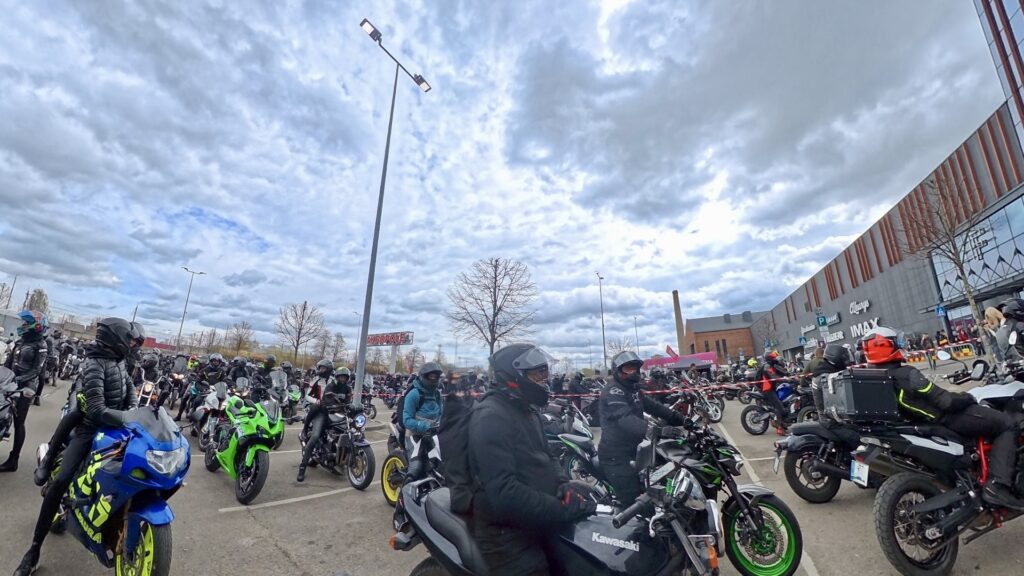
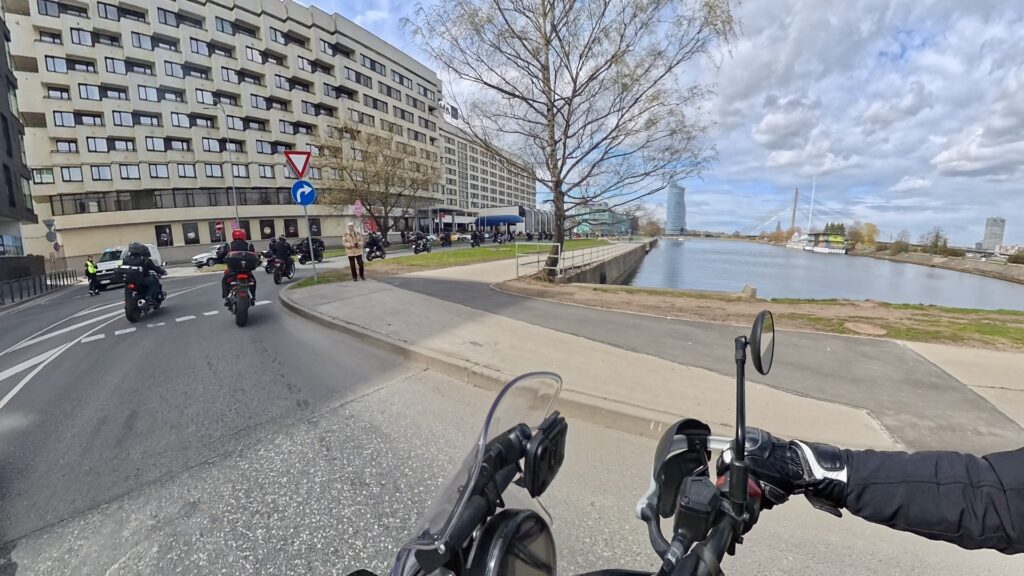
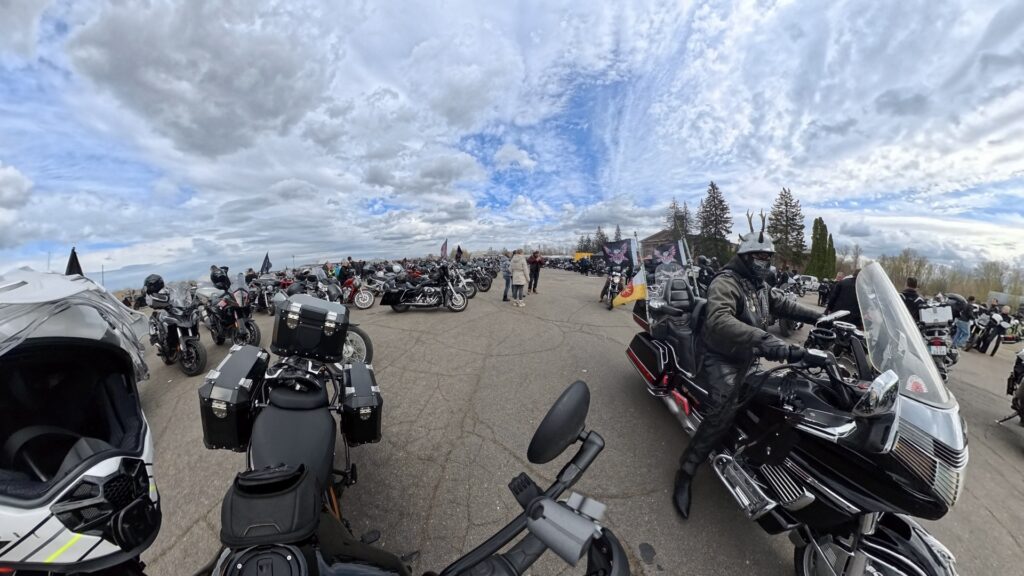
The Latvian motorcycle season opened on Saturday, 25 April 2026, with the traditional Motosezonas atklāšana — the national season-opening event organised every year by the Latvian Motorcyclists Association (MCA).
This year the gathering moved to the AKROPOLE Rīga shopping centre on Latgales iela, after the historical meeting point at the Mols centre closed for renovation. Riders came from all over Latvia, filling the parking lot from ten in the morning. Around midday the rock band Dzelzs Vilks played a short set, and at two o’clock a long parade rolled out across Riga towards the old Spilve airfield.
For Baltic Way Ride, days like this are part of the project: motorcycles, shared roads, Baltic streets, and people connected by the same way of travelling.
From the city centre to the open roads, every ride helps shape the project and the future routes across Estonia, Latvia and Lithuania.
🇮🇹 Italiano
Appunti dalla strada, raduni motociclistici, e ricerca dei percorsi nei paesi baltici. Pezzi brevi, foto reali, scritti tra un viaggio e l’altro.
La stagione motociclistica si apre a Riga
Aprile 2026
La stagione motociclistica lettone si è aperta sabato 25 aprile 2026 con la tradizionale Motosezonas atklāšana — l’evento nazionale di apertura stagione organizzato ogni anno dall’Associazione Lettone dei Motoclub (MCA).
Quest’anno il raduno si è spostato al centro commerciale AKROPOLE Rīga, in Latgales iela, dopo che lo storico punto di ritrovo al centro Mols ha chiuso per ristrutturazione. Sono arrivati motociclisti da tutta la Lettonia, riempiendo il parcheggio già dalle dieci del mattino. Verso mezzogiorno la band rock Dzelzs Vilks ha tenuto un breve concerto, e alle due del pomeriggio una lunga parata si è snodata per Riga fino al vecchio aerodromo di Spilve.
Per Baltic Way Ride, giornate come questa fanno parte del progetto: motociclette, strade condivise, vie baltiche, e persone collegate dallo stesso modo di viaggiare.
Dal centro città alle strade aperte, ogni viaggio contribuisce a costruire il progetto e i percorsi futuri attraverso Estonia, Lettonia e Lituania.
Bauska Castle — where the chain crossed into Latvia
April 2026
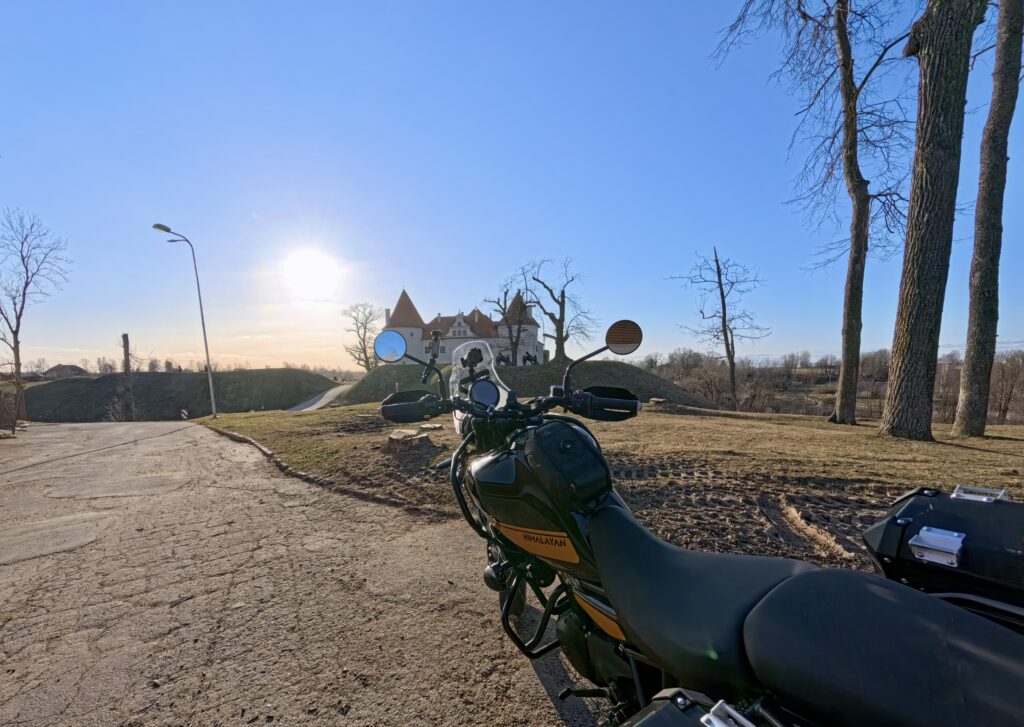
The first significant stop after the Lithuanian–Latvian border, riding north on the A7, is Bauska. A small town with a castle, a river, and almost no tourists outside July and August.
The castle stands on a narrow strip of land where two rivers — the Mūsa and the Mēmele — meet to form the Lielupe. It was built in 1443 by the Livonian Order as a border fortress, then rebuilt between 1582 and 1596 by Duke Gotthard Kettler as the residence of the Duchy of Courland and Semigallia. The result is two buildings on the same hill: medieval ruins of red brick on one side, and a restored Renaissance palace with mannerist sgraffito on the other. It is the only mannerist building of its kind preserved in Latvia.
The castle was partially blown up in 1706 by retreating Russian troops during the Great Northern War and remained in ruins for two and a half centuries. Reconstruction of the ducal palace began in the 1970s and continues to this day.
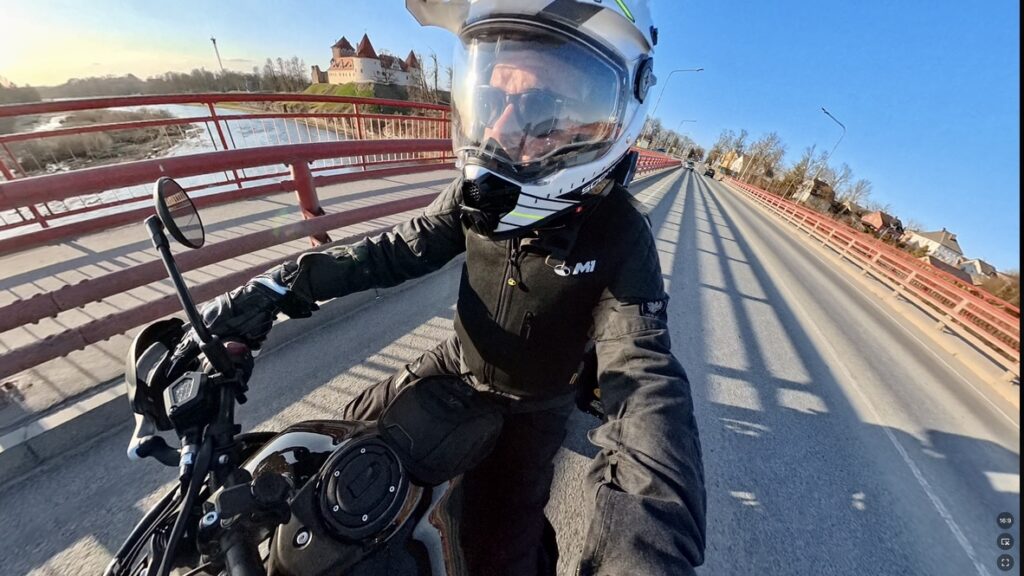
For Baltic Way Ride, Bauska matters for another reason: the human chain of 23 August 1989 passed exactly here. From the bridge over the Mēmele, the line continued north along what is now the A7 — the same road most riders take today.
Practical notes for riders: free parking near the castle entrance, a small café inside the museum complex, fuel and food in the town centre two minutes away. Worth half a day if you have it, an hour if you don’t.
Castello di Bauska — dove la catena entrava in Lettonia
Aprile 2026
La prima fermata significativa dopo il confine lituano–lettone, salendo a nord sulla A7, è Bauska. Una piccola città con un castello, un fiume, e quasi nessun turista fuori da luglio e agosto.
Il castello si trova su una stretta lingua di terra dove due fiumi — il Mūsa e il Mēmele — si incontrano per formare il Lielupe. Fu costruito nel 1443 dall’Ordine Livoniano come fortezza di confine, poi ricostruito tra il 1582 e il 1596 dal duca Gotthard Kettler come residenza del Ducato di Curlandia e Semigallia. Il risultato è due edifici sulla stessa collina: rovine medievali in mattoni rossi da una parte, e un palazzo rinascimentale restaurato con sgraffiti manieristi dall’altra. È l’unico edificio manierista di questo tipo conservato in Lettonia.
Il castello fu parzialmente fatto saltare nel 1706 dalle truppe russe in ritirata durante la Grande Guerra del Nord, e rimase in rovina per due secoli e mezzo. La ricostruzione del palazzo ducale è iniziata negli anni ’70 del Novecento e continua ancora oggi.
Per Baltic Way Ride, Bauska conta anche per un altro motivo: la catena umana del 23 agosto 1989 passava proprio da qui. Dal ponte sul Mēmele, la linea proseguiva verso nord lungo quella che oggi è la A7 — la stessa strada che la maggior parte dei motociclisti percorre ancora oggi.
Note pratiche per i motociclisti: parcheggio gratuito vicino all’ingresso del castello, un piccolo caffè all’interno del complesso del museo, carburante e cibo nel centro città a due minuti. Vale mezza giornata se ce l’hai, un’ora se non ce l’hai.
Vilnius Season Opening
May 2026
Vilnius was one of the first real cross-border rides of the season for Baltic Way Ride.
The route from Riga to Vilnius is simple, direct and useful: around 300 km across Latvia and Lithuania, enough to check the motorcycle after winter, test the riding gear and return to longer-distance riding without turning the first trip of the year into an endurance experiment.
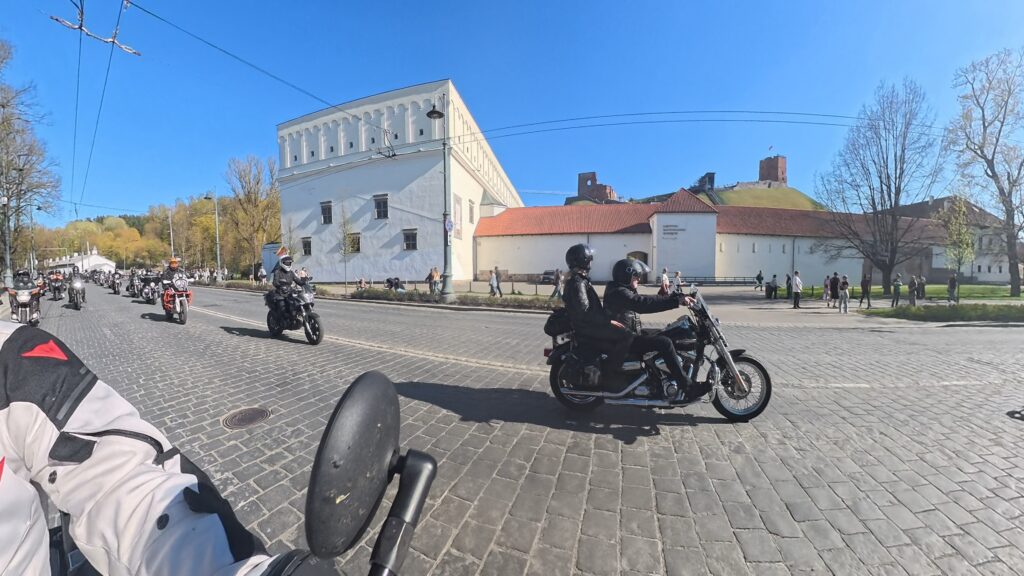
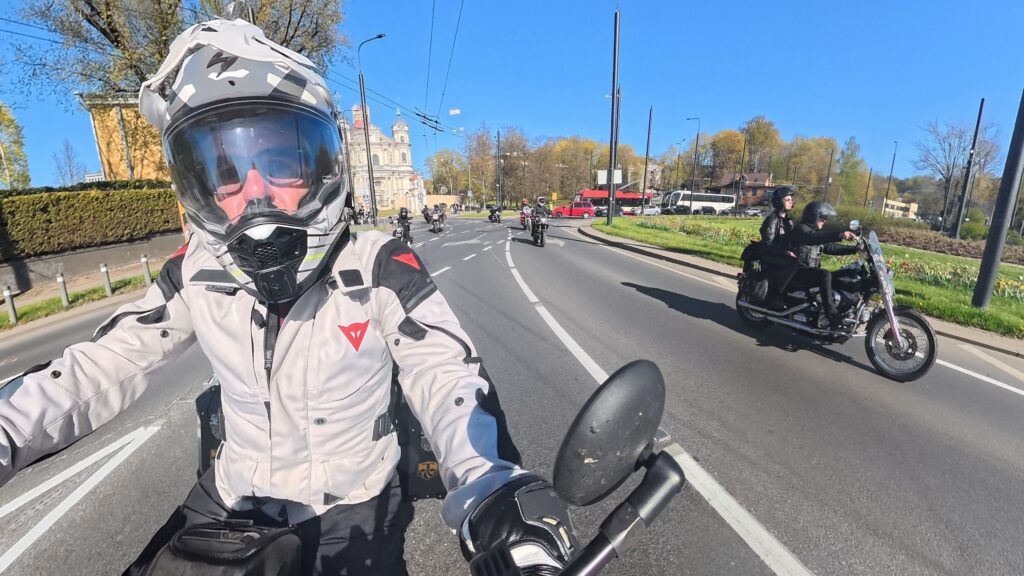
The motorcycle season opening in Vilnius brought riders into the city streets, with the old town, urban roads and Gediminas Castle Hill forming the background of the ride.
For Baltic Way Ride, this road note is not only about the event. It is also about documenting a practical Baltic connection between two capitals: Riga and Vilnius.
The ride shows what this project is built on: real roads, real photos, motorcycle culture and direct field notes from the Baltics.
Vilnius works as a strong southern reference point for future Baltic Way Ride routes, especially for riders interested in Latvia, Lithuania and the wider Baltic motorcycle scene.
Practical notes
- Route: Riga, Latvia to Vilnius, Lithuania
- Distance: around 300 km one way
- Ride type: cross-border Baltic road ride
- Best period: spring, around the motorcycle season opening
- Useful for: route testing, event documentation, photo/video content and first seasonal riding checks
Photo note: motorcycle parade in Vilnius, with riders moving through the city and Gediminas Castle Hill visible in the background.
🇮🇹 Italiano
Vilnius Season Opening
Maggio 2026
Vilnius è stata una delle prime vere uscite internazionali della stagione per Baltic Way Ride.
Il percorso da Riga a Vilnius è semplice, diretto e utile: circa 300 km attraverso Lettonia e Lituania, abbastanza per controllare la moto dopo l’inverno, testare l’abbigliamento e tornare alla guida su media distanza senza trasformare il primo viaggio dell’anno in una prova di resistenza.
L’apertura della stagione motociclistica a Vilnius ha portato i motociclisti nelle strade della città, con il centro storico, le vie urbane e la collina del Castello di Gediminas come sfondo del percorso.
Per Baltic Way Ride, questa road note non riguarda solo l’evento. Serve anche a documentare un collegamento baltico concreto tra due capitali: Riga e Vilnius.
Questo viaggio mostra su cosa si basa il progetto: strade reali, fotografie reali, cultura motociclistica e note raccolte direttamente sul campo nei Paesi Baltici.
Vilnius funziona come un importante riferimento meridionale per le future rotte Baltic Way Ride, soprattutto per motociclisti interessati alla Lettonia, alla Lituania e alla scena motociclistica baltica.
Note pratiche
- Percorso: Riga, Lettonia → Vilnius, Lituania
- Distanza: circa 300 km solo andata
- Tipo di uscita: percorso stradale baltico internazionale
- Periodo migliore: primavera, durante l’apertura della stagione motociclistica
- Utile per: test del percorso, documentazione evento, contenuti foto/video e prime verifiche stagionali di guida
Nota foto: corteo motociclistico a Vilnius, con i motociclisti in movimento attraverso la città e la collina del Castello di Gediminas visibile sullo sfondo.
Vilnius – the motorcycle season begins
Historic streets, hundreds of riders and the shared energy of the road.
Historic Vilnius
The motorcycle parade rides through the historic streets of Vilnius.
Along the Neris River
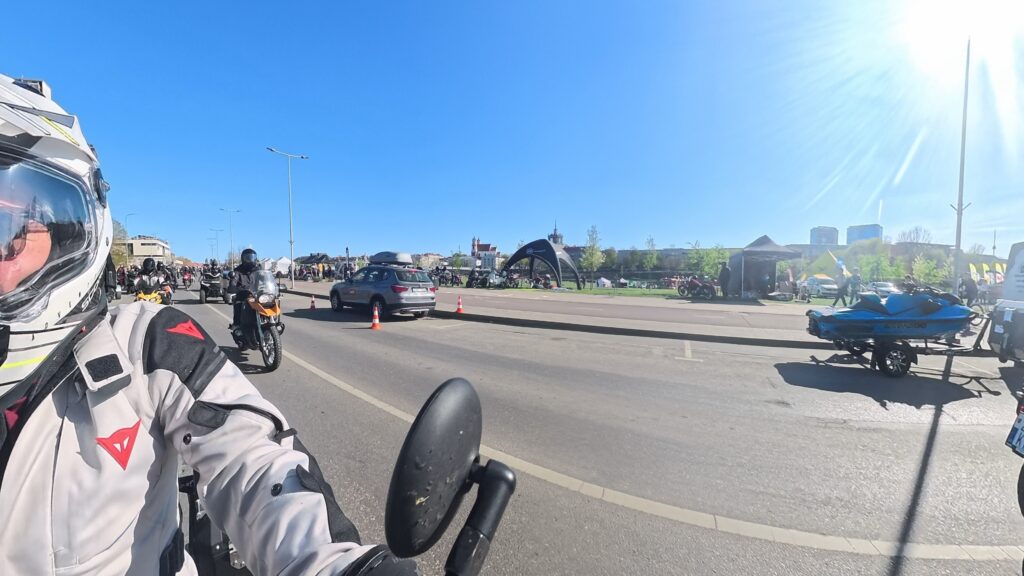
Riders gather near the Neris River before crossing the city together.
Antakalnis
Passing the Baroque Church of St. Peter and St. Paul, one of Vilnius’ most distinctive landmarks.
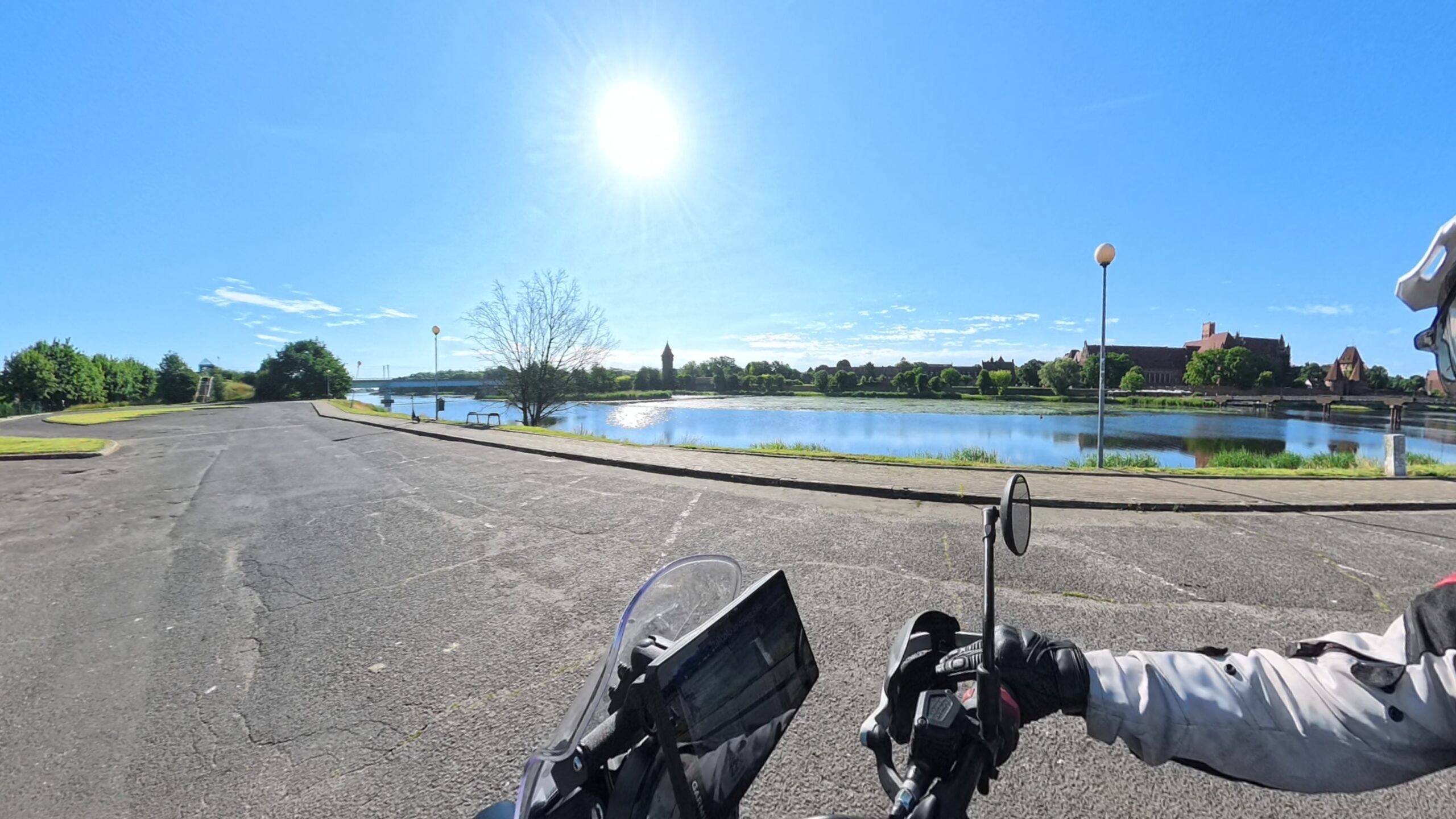
Malbork Castle – a fortress on the road to Poland
Poland ride, June 2026
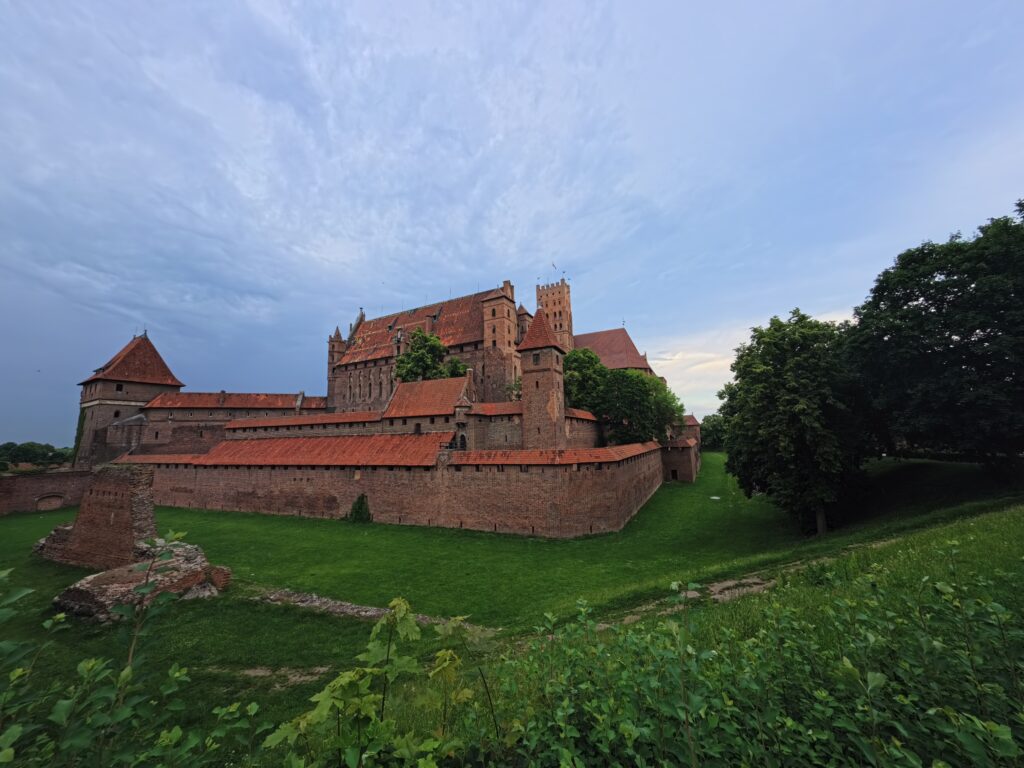
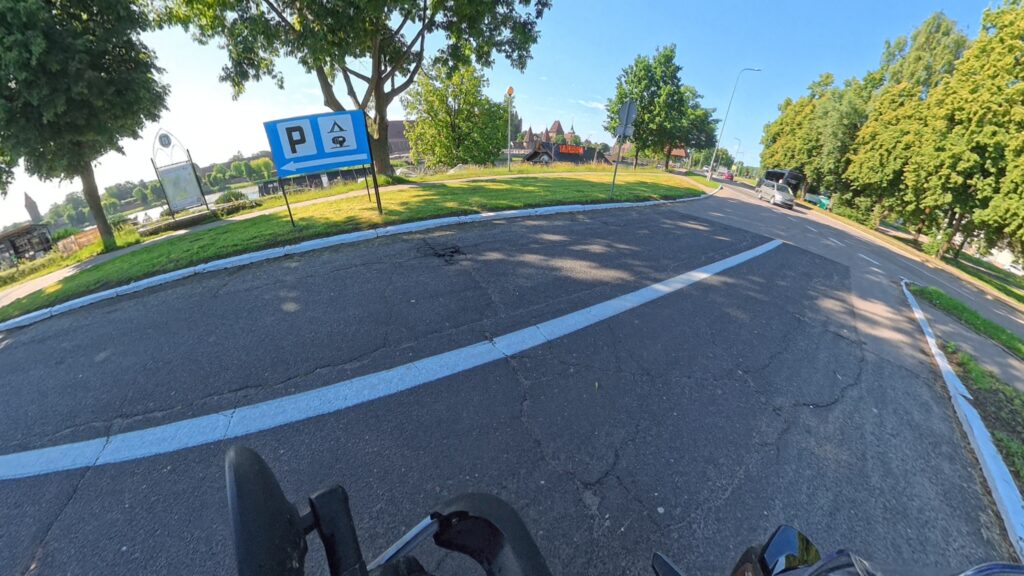
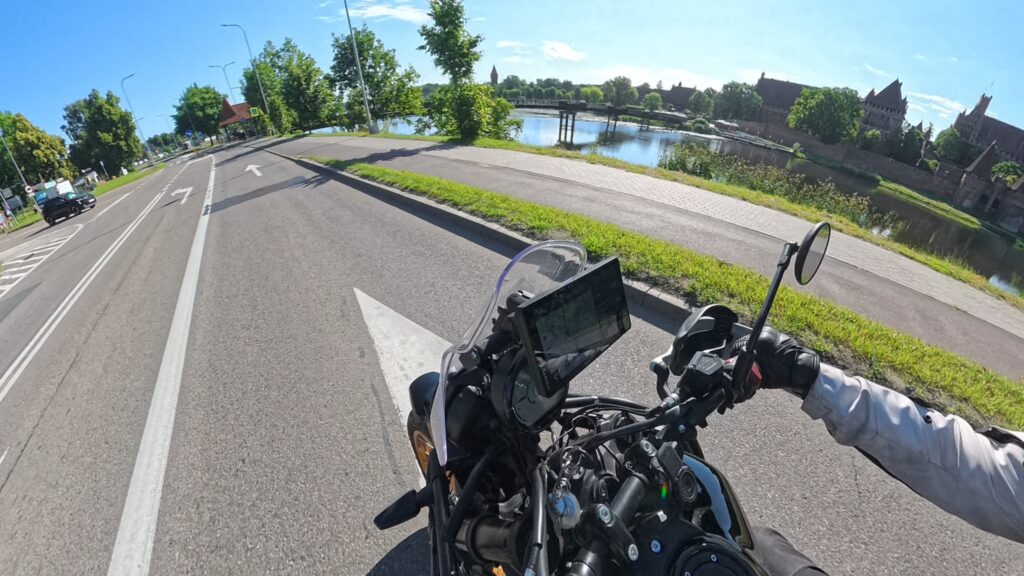
Arriving in Malbork by motorcycle, where the road, river and castle become part of the same travel note.
Malbork Castle – a fortress on the road to Poland
Poland ride, June 2026
Malbork Castle was one of the strongest visual and historical stops on the ride from Riga towards Poland.
The arrival by motorcycle gives the place a different meaning. The road enters the town, the river opens the view, and the brick fortress appears in the background. It is not just a destination: it becomes part of the ride.
For Baltic Way Ride, Malbork works as a natural extension of the Baltic road experience. The route moves south from Latvia, crosses Lithuania and reaches northern Poland, connecting the Baltic region with a wider historical landscape.
This road note is not only about visiting a castle. It is about documenting how a long-distance ride changes the way a place is seen. By motorcycle, the approach matters as much as the destination.
Malbork is a useful reference point for future Baltic Way Ride extensions towards Poland, especially for riders interested in history, architecture, river landscapes and longer routes between the Baltics and Central Europe.
Practical notes
- Route: Riga, Latvia to Malbork, Poland
- Distance: around 600 km one way, depending on the route
- Ride type: long-distance Baltic to Poland road ride
- Recommended format: two days, especially with photo and rest stops
- Useful for: route testing, historical content, photo/video documentation and future Baltic Way Ride extensions
🇮🇹 Italiano
Castello di Malbork – una fortezza sulla strada verso la Polonia
Viaggio in Polonia, giugno 2026
Il Castello di Malbork è stata una delle tappe visive e storiche più forti del viaggio da Riga verso la Polonia.
Arrivare in moto dà al luogo un significato diverso. La strada entra nella città, il fiume apre la vista e la fortezza in mattoni appare sullo sfondo. Non è solo una destinazione: diventa parte del viaggio.
Per Baltic Way Ride, Malbork funziona come una naturale estensione dell’esperienza stradale baltica. Il percorso scende dalla Lettonia, attraversa la Lituania e raggiunge il nord della Polonia, collegando la regione baltica a un paesaggio storico più ampio.
Questa road note non riguarda solo la visita a un castello. Racconta come un viaggio di lunga distanza cambi il modo di vedere un luogo. In moto, l’avvicinamento conta quanto la destinazione.
Malbork è un riferimento utile per future estensioni di Baltic Way Ride verso la Polonia, soprattutto per motociclisti interessati alla storia, all’architettura, ai paesaggi fluviali e ai percorsi più lunghi tra Baltici ed Europa centrale.
Note pratiche
- Percorso: Riga, Lettonia → Malbork, Polonia
- Distanza: circa 600 km solo andata, secondo il percorso scelto
- Tipo di uscita: viaggio stradale di lunga distanza dai Baltici alla Polonia
- Formato consigliato: due giorni, soprattutto con soste foto e riposo
- Utile per: test percorso, contenuti storici, documentazione foto/video e future estensioni Baltic Way Ride
Nota foto: arrivo in moto vicino al Castello di Malbork, con il fiume, la strada e la fortezza in mattoni a definire l’identità visiva della tappa.
Riga to Jūrmala – seaside road note
Bicycle scouting ride, July 2026
The ride from Riga to Jūrmala is one of the most accessible short routes for exploring the connection between the city, the forest and the Baltic seaside.
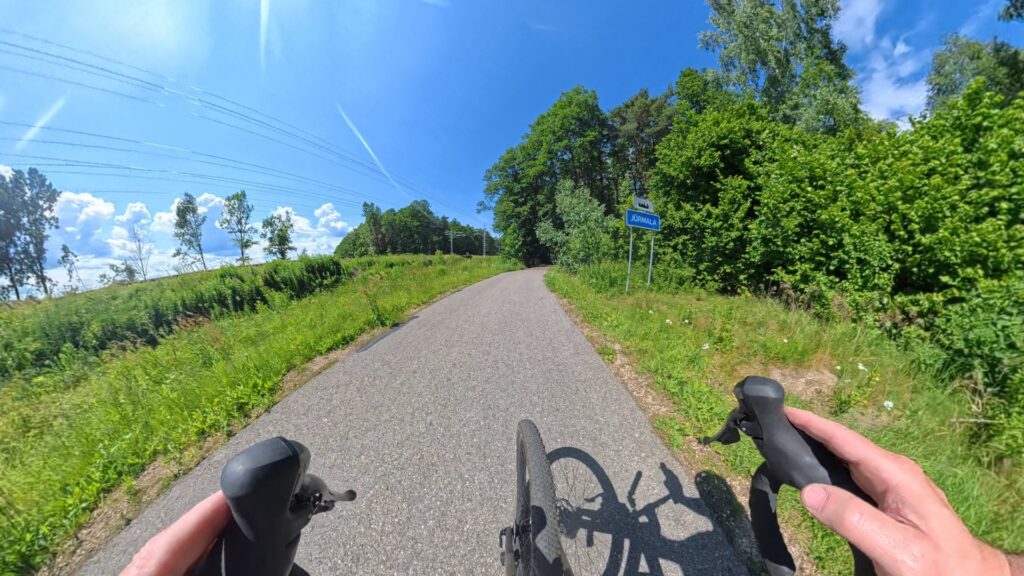
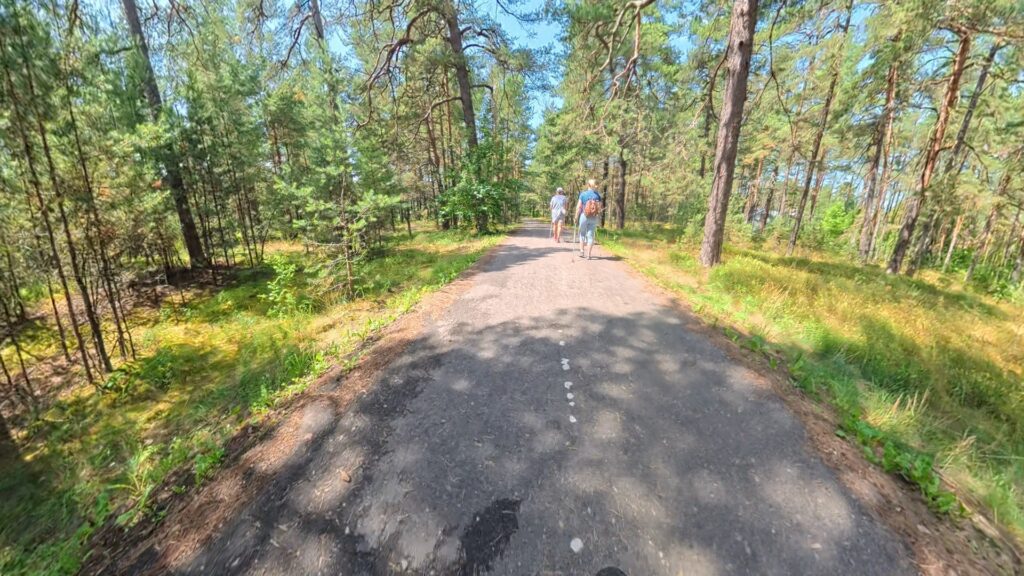
This road note was made by bicycle, following local paths, quiet sections, forest roads and the railway corridor towards Jūrmala. It is not a long-distance motorcycle route, but it belongs naturally to the Baltic Way Ride project because it documents real movement through the territory.
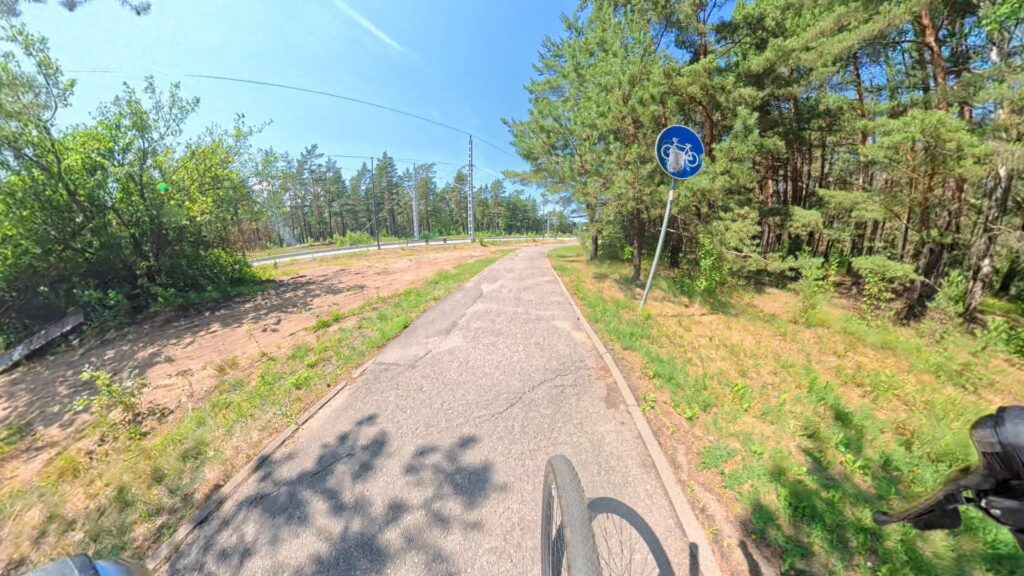
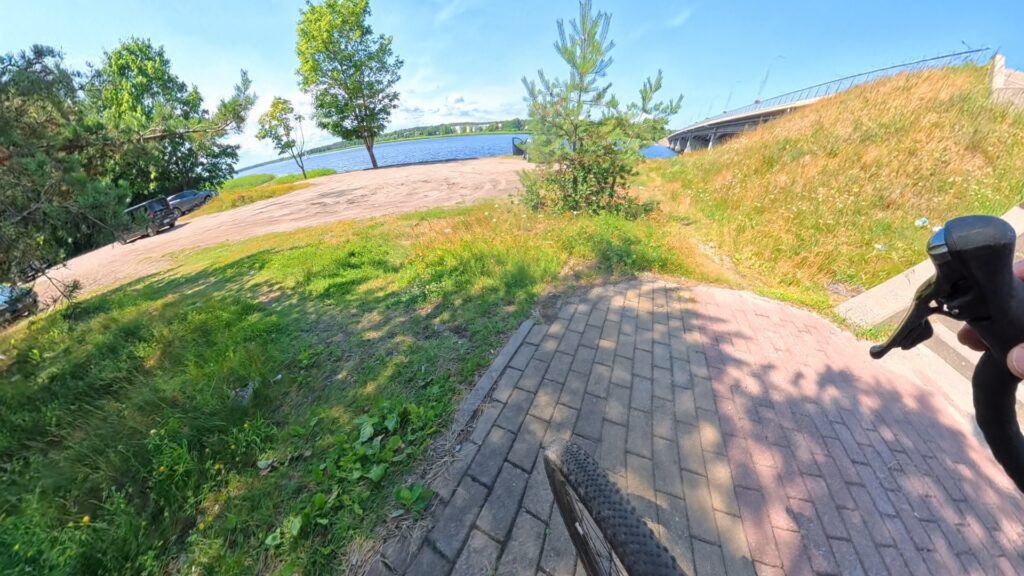
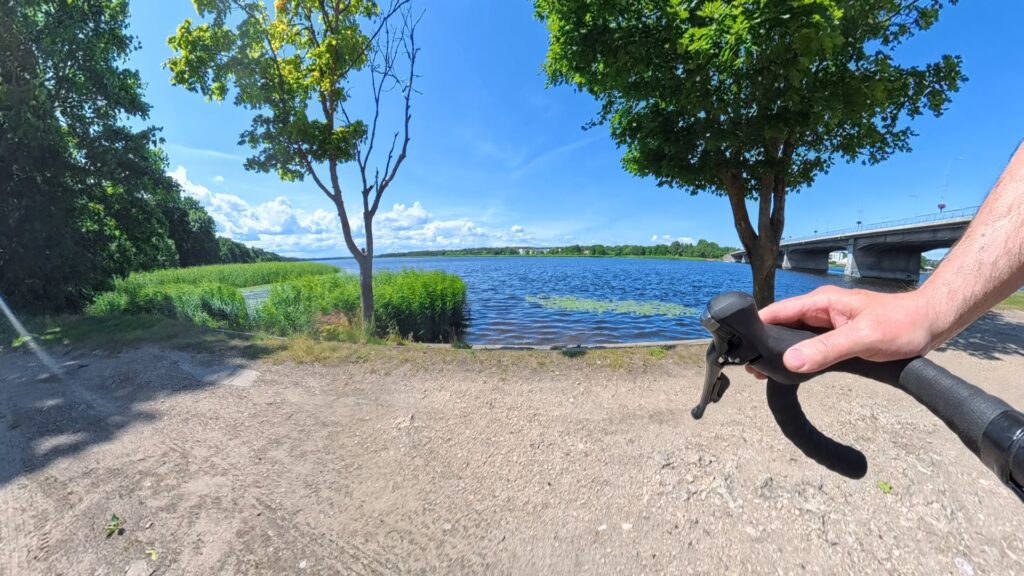
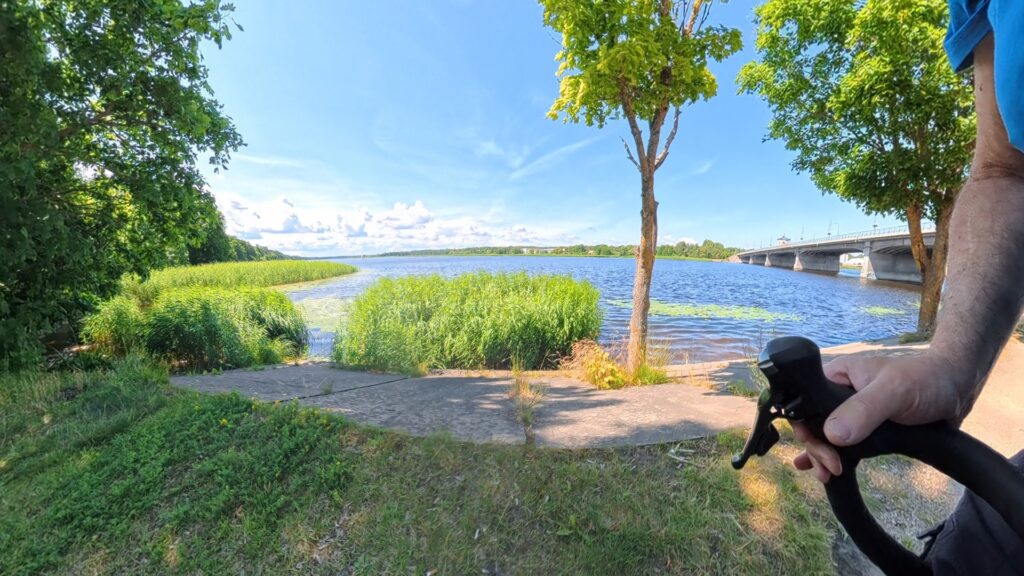
The route shows a different side of Baltic travel: slower, closer to the ground, and more connected to small details along the way. The train line, the forest, the cycle signs, the river and the beach all become part of the same travel note.
Arriving in Jūrmala by bicycle gives the seaside a more direct feeling. The city is not just a destination after a drive; it becomes the result of a physical route from Riga, through green corridors and local roads, ending at the beach.
For Baltic Way Ride, this section is useful as a scouting note for future soft mobility content, short local rides, seaside routes and mixed travel ideas combining bicycle, train and road exploration.
Practical notes
- Route: Riga to Jūrmala, Latvia
- Distance: around 25–30 km one way, depending on the starting point and route
- Ride type: bicycle scouting ride, city to seaside
- Recommended format: half day or relaxed day ride
- Useful for: local route scouting, seaside content, cycling notes, photo/video documentation and future Baltic Way Ride extensions
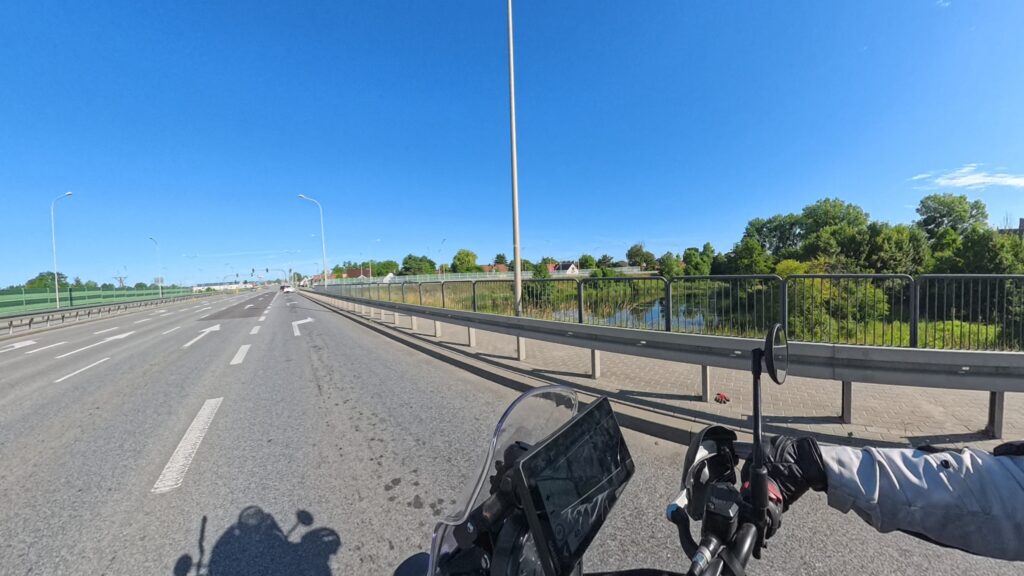
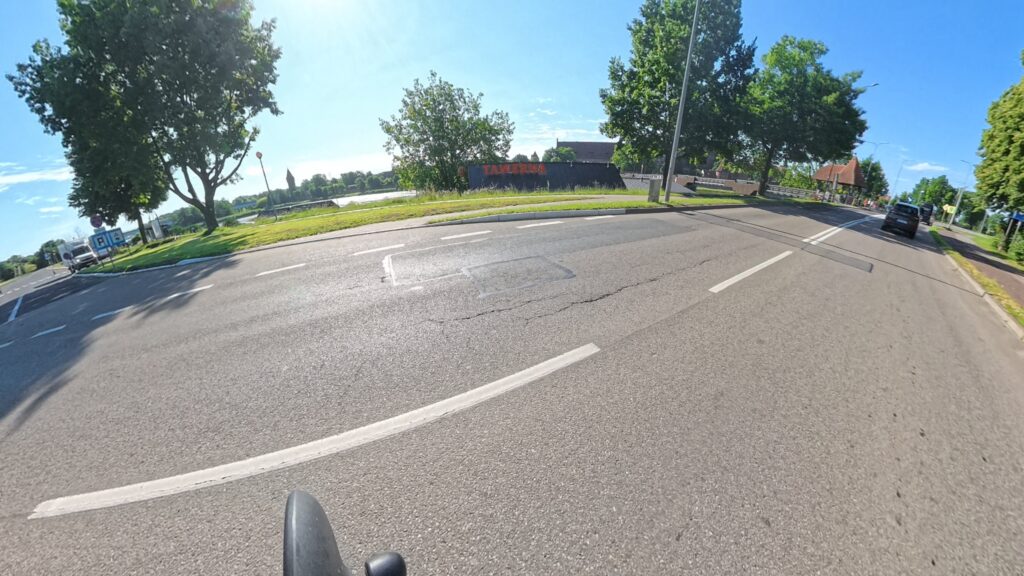
Photo note: cycling from Riga towards Jūrmala, following forest paths, railway sections and local roads before reaching the Baltic seaside.
🇮🇹 Italiano
Da Riga a Jūrmala – road note verso il mare
Uscita esplorativa in bicicletta, luglio 2026
Il percorso da Riga a Jūrmala è una delle tratte brevi più accessibili per esplorare il collegamento tra città, bosco e costa baltica.
Questa road note è stata realizzata in bicicletta, seguendo tratti locali, sezioni tranquille, strade nel verde e il corridoio ferroviario verso Jūrmala. Non è una rotta motociclistica di lunga distanza, ma appartiene naturalmente al progetto Baltic Way Ride perché documenta il movimento reale attraverso il territorio.
Il percorso mostra un lato diverso del viaggio baltico: più lento, più vicino al terreno e più attento ai dettagli lungo la strada. La ferrovia, il bosco, i cartelli ciclabili, l’acqua e la spiaggia diventano parte della stessa nota di viaggio.
Arrivare a Jūrmala in bicicletta dà al mare un significato più diretto. La città non è solo una destinazione raggiunta in auto; diventa il risultato di un percorso fisico da Riga, attraverso corridoi verdi e strade locali, fino alla spiaggia.
Per Baltic Way Ride, questa sezione è utile come nota esplorativa per futuri contenuti di mobilità dolce, percorsi brevi locali, rotte verso il mare e idee di viaggio miste tra bicicletta, treno ed esplorazione su strada.
Note pratiche
- Percorso: Riga → Jūrmala, Lettonia
- Distanza: circa 25–30 km solo andata, secondo punto di partenza e percorso scelto
- Tipo di uscita: esplorazione in bicicletta dalla città al mare
- Formato consigliato: mezza giornata o giornata rilassata
- Utile per: scouting locale, contenuti sul mare, note ciclabili, documentazione foto/video e future estensioni Baltic Way Ride
Nota foto: percorso in bicicletta da Riga verso Jūrmala, tra bosco, ferrovia, piste ciclabili, strade locali e arrivo sulla costa baltica.